Cloud Computing Transformations - Coiled vs Kubernetes
The Need for Cloud Computing in Geospatial Analysis
Processing Analysis Ready Cloud Optimized (ARCO) datasets demands scalable computing infrastructure. Climate and Earth observation data often exceed local machine capabilities, requiring distributed computing solutions that can scale dynamically with workload demands.
Coiled: Simplified Cloud Scaling
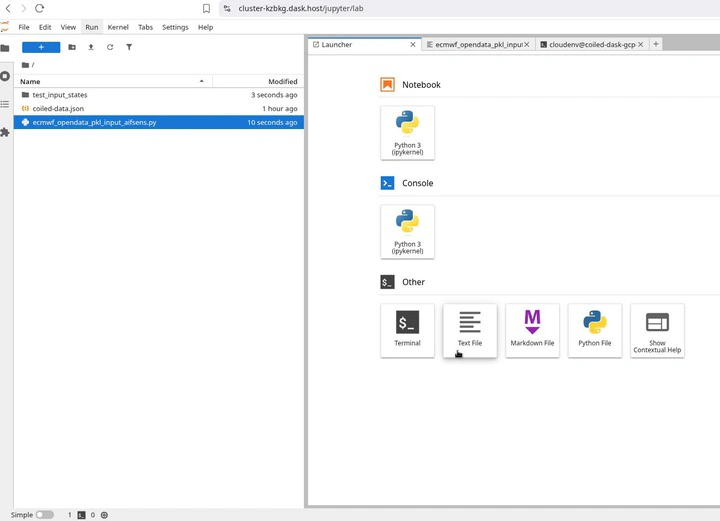
Coiled provides a remarkably simple path to cloud-based Dask clusters. With just a few lines of Python code, users can spin up distributed computing environments on AWS or GCP:
import coiled
cluster = coiled.Cluster(n_workers=10)
This simplicity eliminates infrastructure management overhead, allowing scientists to focus on analysis rather than DevOps. Coiled handles software environments, networking, and resource provisioning automatically.
The Kubernetes Alternative
For organizations requiring full control, Kubernetes offers a self-managed approach. The Zero to JupyterHub with Kubernetes tutorial provides comprehensive guidance for deploying JupyterHub on Kubernetes clusters. However, this path involves a steep learning curve covering container orchestration, Helm charts, networking, storage provisioning, and cluster administration.
The complexity is justified when building in-house cloud infrastructure for institutional use, where long-term control over data, security, and customization outweighs setup costs.
Managed Services: 2i2c
2i2c offers managed JupyterHub infrastructure for research communities, handling the Kubernetes complexity on behalf of users. While this removes operational burden, scaling up involves significant subscription costs that may challenge budget-constrained institutions.
Choosing Your Path
| Approach | Complexity | Cost Model | Control |
|---|---|---|---|
| Coiled | Low | Pay-per-use | Limited |
| Self-managed K8s | High | Infrastructure | Full |
| 2i2c | Low | Subscription | Moderate |
The choice depends on institutional capacity, budget, and long-term infrastructure goals.