Learning eoAPI - Deploying Titiler and TiPG
Introduction to eoAPI
eoAPI is an open-source ecosystem developed by Development Seed for building Earth Observation (EO) data APIs. It provides a complete stack for discovering, cataloging, and serving geospatial data through modern cloud-native patterns. The ecosystem follows the SpatioTemporal Asset Catalog (STAC) specification, making it interoperable with the broader geospatial data community.
Traditional eoAPI deployments rely on Kubernetes and Docker orchestration, which can be complex for newcomers. However, understanding the individual components separately offers a gentler learning curve before tackling the full infrastructure.
Core Components: Titiler and TiPG
Titiler - Dynamic Raster Tile Server
Titiler is a dynamic tile server for Cloud Optimized GeoTIFFs (COGs) and other raster formats. It generates map tiles on-the-fly without pre-processing, enabling efficient visualization of large raster datasets. Titiler integrates with PgSTAC to serve tiles directly from STAC catalog items, making it essential for any EO visualization workflow.
TiPG - Vector Tile Server
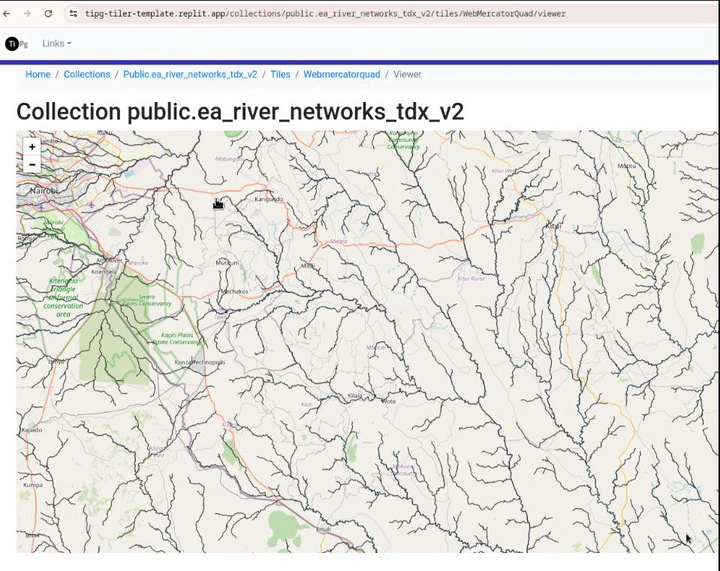
TiPG (Tiles from PostGIS) serves vector tiles in Mapbox Vector Tile (MVT) format directly from PostGIS databases. It enables efficient streaming of vector data like administrative boundaries, river networks, and point features without pre-generating tile pyramids.
Learning Through Simplified Deployment
A practical approach to learning eoAPI involves deploying Titiler and TiPG outside the typical Kubernetes setup. Using platforms like Replit with built-in PostgreSQL and AI agent support provides an accessible starting point for experimentation.
Replit Templates
These templates simplify the learning process by handling common deployment challenges like reverse proxy configuration, allowing focus on understanding how the services work.
Example Applications
COG Visualization with Titiler: A hands-on example demonstrating raster tile serving from a Replit-deployed endpoint.
Vector Tiles with TiPG: Visualizing river networks using MVT format for web mapping applications.
Path Forward
This simplified deployment approach serves as a stepping stone toward production-ready setups. The knowledge gained helps when transitioning to Kubernetes orchestration or serverless platforms like GCP Cloud Run, while maintaining understanding of how eoAPI’s interlinked components function together.